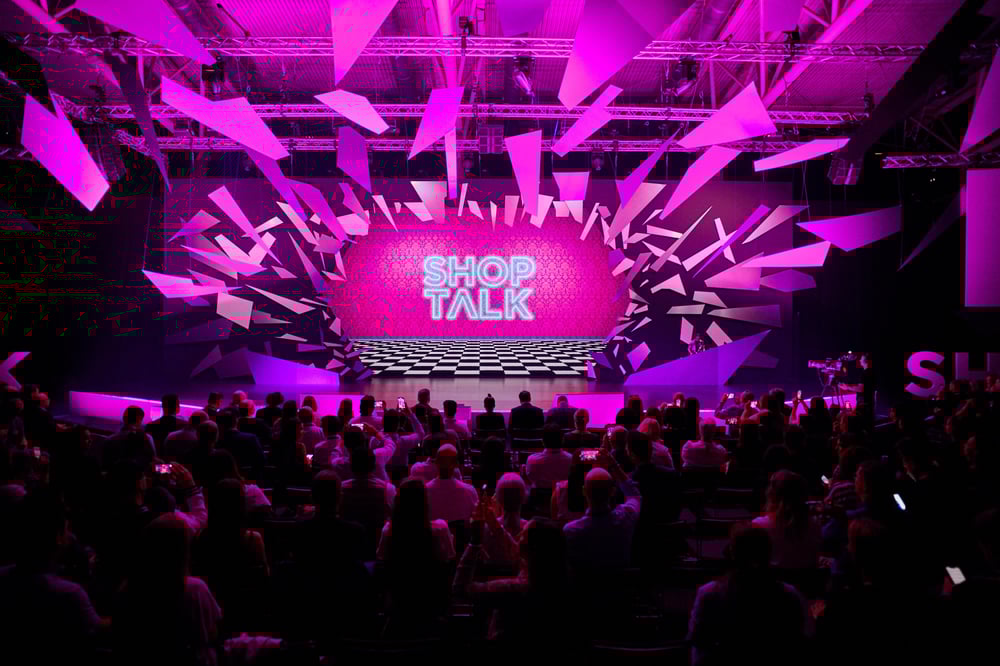
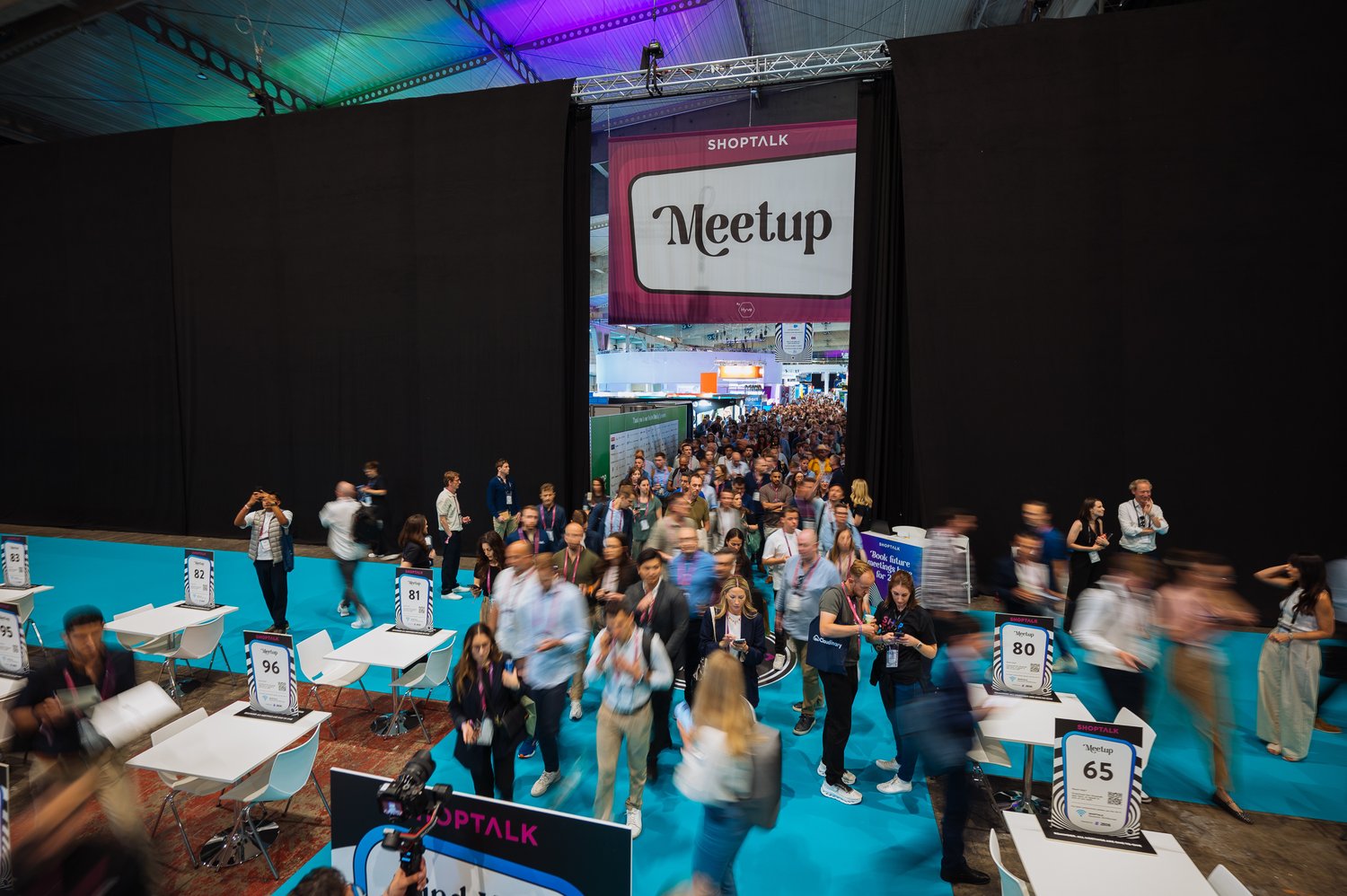
The past four years have had a lot of ups and downs, uncertainty, and heavy tests to retailer resilience. The Pandemic, recovery, wars, and hyperinflation, have stress-tested retailers' digital and supply chain capabilities and put enormous pressure on retail organizations to right-size their operations to protect margins. However, now in 2024, the tone has shifted to cautious optimism, with many retailers shifting their focus on growth. Back in June, we went to Shoptalk Europe to meet retailers, learn from them, and share our perspectives. In the spirit of knowledge sharing, we wanted to put pen to paper and give you our main takeaways from one of the biggest retail conferences in Europe.
GenerativeAI
AI and especially GenAI was everywhere from keynotes to tech booths, with everyone tracking how long it takes for a speaker to mention AI in their talk. The CEO of Curry's positioned GenAI as "superabundant intelligence for practically free", and expected it to be overhyped in the short term, and underhyped in the long term.
Rather than one killer app, GenAI is used in very many practical ways. Otto and Amazon utilize it throughout the e-commerce customer journey (natural language search, summarizing customer reviews, SEO optimization, product descriptions, and more), Mediamarkt employs it for forecasting, Zenni leverages it for creating, testing, and optimizing marketing creative, Zalando and Amazon implement it as a conversational shopping assistant, AWWG highlights its role in the design process (mood boards and design inspiration), and IKEA, Mediamarkt and AWWG use it to enhance customer service.
For getting started with GenAI, the CEO of Curry's had the following advice: Start broadly, focus on a few use cases, and work with partners who know what they are doing.
Read more: Five ways to get started with GenAI in the industrial domain
Hyper-personalization and conversational commerce
Hyper-personalization is a major trend this year, driven by vast customer data, advanced AI technologies, and a growing consumer demand for tailored experiences. This trend spans newsletters, website content, recommendations, offers, product discovery, and loyalty programs. Retailers are ambitiously aiming to personalize every touchpoint.
Zenni has been quite impressive with their personalized product images that adjust to customer’s eyewear, skin tone, hair, and other features. Major marketplaces like Zalando, Amazon, and Otto see conversational assistants as the pinnacle of hyper-personalization, with Zalando formulating the challenge as: "How to understand 1000s of brands, 100M products, and have conversations with 150k people?".
Pandora highlights the importance of a solid foundation to scale personalization. Data and insights feed into a rule engine that informs content and drives engagement across channels. "It was a mess when we started, we have a lot of legacy that needed to be cleaned up and consolidated. Convincing stakeholders that want to build a new CX that you need to invest in boring backend stuff was hard. We also started by hiring data scientists, but realized what was needed was data engineers".
How to understand 1000s of brands, 100M products, and have conversations with 150k people?
AI vs humans
The rise of AI in retail has underscored the evolving role of humans in the industry. Many retailers began their GenAI journey with customer service, and they are now enjoying more efficient and effective operations. As Alex Baldock, Group CEO of Curry's, stated, "Many find GenAI more empathetic than humans."
These improved operations open new opportunities for the existing workforce. For example, 46% of IKEA’s customer service cases are now handled by AI, freeing up personnel to focus on sales activities, which has generated an estimated 1.5 billion euros in added sales. With advanced tools supporting their work, store associates can now dedicate more time to assisting customers.
As H&M puts it, "Finally, we can get back to providing customer service!"
Omnichannel
Unified commerce, omnichannel, and seamless shopping experiences — flexing to customer intent across touchpoints — continue to be a hot topic. We’ve seen a shift from broad concepts to actionable steps that enhance customer journeys.
Bauhaus, for example, has reduced friction across six key areas:
- Can't find product → Locate items in-store and check availability
- Need product fast → Click and collect (with 93% of Kingfisher’s e-commerce orders and 75% of JD Group’s orders fulfilled from stores)
- Need additional information → Scan product barcodes for more details and technical specifications
- Enabling returns → Use digital receipts scanned into apps (Kingfisher even allows returns of third-party/marketplace products)
- Find sales associates → Book appointments with experts for specific product categories, accommodating wide opening times
- Want to see alternatives → Browse the full product offering
Bauhaus’s recipe for omnichannel success? Listen to customers, identify pressing needs, solve them with simple technology, and repeat.
“Listen to customers, identify pressing needs, solve them with simple technology, and repeat”
Loyalty
Retailers are exploring new ways to build sustainable loyalty among customers. Loyalty today extends beyond mere purchases, focusing instead on frequent buying, word-of-mouth promotion, and functional loyalty elements.
Curry's has recognized the impact of their services on customer loyalty, noting that customers who use Curry's credit are 75% more likely to return. Retailers like John Lewis and Frasers Group are integrating loyalty into a broader customer engagement framework, leveraging data collection, activation, and monetization through retail media to drive customer growth. Frasers Group has highlighted a shift in metrics from purely focusing on sales to considering engagement, cross-channel activity, and lifetime value.
AWWG shared a strategic approach to investing in loyalty, emphasizing the need to differentiate between loyal customers, aspirational customers, and nostalgic customers (those who purchase but are not part of the core audience). They advise: “Your most loyal customers deserve exceptional loyalty from you. Allocate the most resources to them. Invest 20-30% in aspirational customers to gradually cultivate their loyalty”.
Read more: Looking to improve customer loyalty? Here’s what 5 experts advise for 2024 and beyond
Addressing size & fit to boost conversion and reduce returns
Understanding and addressing size and fit issues are crucial for online retailers to improve conversion rates and reduce returns. Personalized size recommendations, virtual try-ons, clear communication of fit types, and easy return processes enhance the customer experience.
Amazon has seen conversion rates on product detail pages (PDPs) with 3D and try-on features increase by 2.5-3 times. Zalando implemented their ZEOS size & fit solution, resulting in a 10% reduction in returns.
Victoria's Secret has introduced quizzes and guides for better sizing and is establishing a European distribution center to simplify returns, which is expected to significantly boost sales.
AWWG (Pepe Jeans) highlighted regional consumer behavior differences in Europe: Nordic consumers frequently return two-thirds of their orders, while Southern Europeans prefer to familiarize themselves with products in-store before ordering online. AWWG emphasized the importance of clear size and fit communication in product descriptions and images, helping customers understand differences between fits (e.g., loose vs. slim) to reduce returns.
Product discovery: search, merchandising, and recommendations
Many brands are eager to move beyond transactions to inspire and engage customers more deeply. Inspiration spans products, trends, outfits, occasions, and moods. Discovery combines inspirational content, curated products, personalized recommendations, and serendipity.
MyTheresa uses manually merchandised key pages to showcase curated products. Zalando found that customers use their fashion assistant for exploration, not just finding specific items, with queries three times longer than standard searches and an average of four interactions per session.
Hugo Boss tailors product discovery to different customer segments, focusing on luxury and premium for millennials and a broader, louder approach for Gen Z. Maude introduced "contextual commerce," creating the context to discuss products. They sell sex essentials by exploring modern intimacy in the context of culture, design, health, and history.
A recent focus has been on outfit builders and "complete the look" features, offering curated suggestions to help customers style pieces together.
Anchoring in your brand
Many experts emphasized that understanding your brand is the fundamental first step in enhancing omnichannel strategies, discovery, personalization, and digitalization at large. This involves knowing who you serve, your point of view, your approach to curation and storytelling, and your tone of voice.
It's about connecting all touchpoints from a brand perspective and reinforcing brand assets across channels in a seamless manner to foster brand loyalty and love. Cultural relevance and creative elements, such as styling and artwork, also play a significant role.
For example, Mango focuses on curation and storytelling, promoting not just products but a point of view and the story behind each piece. With their broad assortment, this approach highlights trends and personalizes them for customers, explaining why they might dress in a certain way.
H&M SoHo store: redefining omnichannel retail
The most inspiring presentation was H&M's keynote on the design philosophy behind their SoHo store, the first installment of their new flagship concept. This innovative approach reimagines omnichannel retail by using data in a groundbreaking way.
- Global Live Data Integration: H&M incorporates global live data on trends, precise in-store product locations, product movement patterns, commonly paired items, and items tried on but not purchased.
- RFID Technology: The store employs RFID technology to track items with 1-meter accuracy.
- Seamless Omnichannel Experience: The H&M app acts as the "glue" between different channels, ensuring a cohesive shopping experience.
- Local Relevance and Demand-Driven Supply Chain: Access to this data allows H&M to make stores more relevant locally and move towards a demand-driven supply chain, ensuring products are in the right store at the right time.
- Tailored Promotions and Inventory Management: Online search data tailors window displays and store promotions to local trends. In-store data informs the buying office about items frequently tried on but not bought, enabling better inventory management and creating a more premium shopping experience by reducing the number of articles in-store.
- Enhanced Customer Recommendations: Data on commonly paired items can give store associates ideas for recommendations on how to complete a look.
Final thoughts
In 2024, we can finally witness a pivotal moment of growth in retail following years of unprecedented challenges. Retailers are moving from survival mode to strategic advancement, embracing new technologies to enhance customer service, personalization, and sustainable operational efficiency.
While digital systems and customer journeys get only more complex, it’s essential to build streamlined and interconnected data flows in order to alleviate any possible bottlenecks. The evolution of omnichannel strategies and data-driven personalization is enabling seamless, engaging experiences that foster deeper and more authentic customer loyalty.
This era of cautious optimism signals a promising future where technology and human touch harmoniously enhance the retail experience, both for customers and staff.
REAKTOR RETAIL
Tailored digital solutions for forward-thinking retailers