

Many publishers master the cycle of launch, buzz, repeat, but stumble when turning fleeting excitement into long-lasting relationships. Short-sighted moves – forced sign-ups, one-off loyalty schemes, and gimmicky campaigns – are the gaming equivalent of speed dating: fun but shallow.
Building long-term loyalty requires thinking beyond individual games. That's exactly why adopting a Player Relationship Strategy (PRS) matters: it provides a holistic framework designed to engage players throughout their entire journey, turning fleeting interactions into enduring relationships across multiple titles and experiences. Here’s your guide to PRS.
Four elements of a great Player Relationship Strategy
1. Vision & goals
Define what success looks like. Maybe it’s direct sales, thriving communities, or a stronger overall brand.
Define your answers to these questions:
- What do we actually want from our player relationships
- Which approach best fits our brand, audience, and resources
- How does this approach align with our overall business goals
2. Emotional engagement
Study what truly motivates players through interviews, social listening, and data. Map those insights to features like exclusive content and access, special events, or collaborative communities.
Define your answers to these questions:
- What do players love (or hate) about the current experience
- What are the most significant emotional drivers that keep them coming back
- How do we translate these insights into concrete concepts and services?
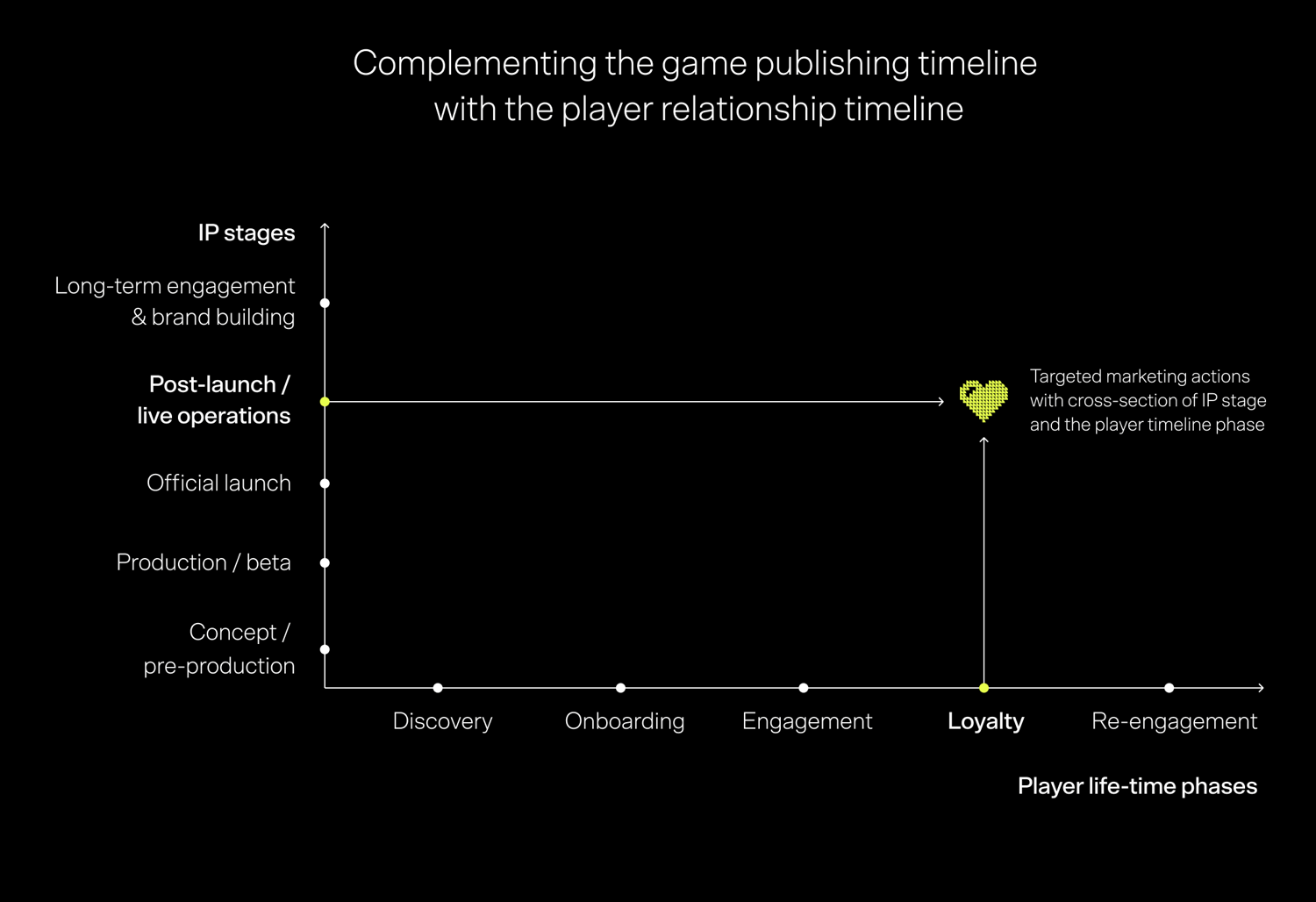
3. Lifetime value-based business model
Recognize each stage of the player’s journey (discovery, onboarding, engagement, loyalty, re-engagement) and align marketing or monetization with those phases. By matching offerings to a player’s mindset at each step, you build loyalty and long-term revenue.
Define your answers to these questions:
- How do we turn emotional engagement into a revenue model that players appreciate
- Where do monetization opportunities fit into each phase of the player lifecycle
- How can we maintain a fair balance between player satisfaction and business growth?
4. Service architecture
Unify every piece of information on players from games, newsletters, loyalty apps, storefronts, and community channels into a shared data ecosystem. This integration fuels continuous improvement and cumulative value creation, providing you direct access to refined first-party data, where each player interaction strengthens your overall approach.
Define your answers to these questions:
- Which platforms and tools will best support our player experience and goals
- How do we ensure data flows seamlessly between different services and platforms
- What roadmap or MVP approach do we need for building, testing, and iterating quickly?
Three phases to getting there
Phase 1: Target setting & background
Identify goals, assess existing services, and align stakeholders on a clear vision. This shared “north star” will guide everyday business, marketing, design, and development decisions, ensuring each choice supports your ultimate objectives.
Phase 2: Hypothesis & scenarios
Design and test fresh ways for emotional engagement, refine your business models, and plan the necessary tech improvements. Think beyond single-platform use cases and focus on the long game that brings players in and keeps them engaged across all channels.
Phase 3: Strategy creation
Finalize the vision, metrics, and operational model so teams can collaborate and iterate effectively. Make the feedback loops from real metrics to design and development work quick and nimble, allowing you to adapt new services and features with speed and precision.
If you want to dive deeper into Player Relationship Strategies, download our recent white paper on the topic!
Download the white paperWHITE PAPER
How to build player relationships that last