

Picture this: You wake up early, sip your coffee, and dive into your to-do list, feeling productive. But then – ping – your next meeting starts in ten minutes. You open your calendar and see a string of back-to-back meetings. Sound familiar?
Today’s knowledge workers are drowning in meetings, spending over a third of their workweek in them. Executives fare even worse, clocking in around 23 hours a week in meetings, with a staggering 71% reporting these meetings as inefficient and unproductive.
Humans have an incredible capacity to collaborate. Meetings are places where this capacity should manifest itself through ideas, solutions, and accelerated progress. Yet, most meetings are poorly facilitated, and the only way to endure them is multitasking through email and instant message debt, wondering why this meeting is happening in the first place, leading to more confusion, more wasted time, and, ultimately, more meetings. Since 2000, the number of meetings has increased by 8-10% every year, but productivity hasn't kept pace.
So, the big question is: Are your meetings boosting productivity or draining it?
Facilitation is the secret ingredient to better meetings
Facilitation is a means of improving what we do and how we do it. The Cambridge Dictionary defines facilitation as “helping other people to deal with a process or reach an agreement without getting directly involved.” In other words, it's the skill of guiding a group to a jointly defined and desired goal.
Now imagine this: meetings where everyone contributes, decisions are made quickly, and participants leave feeling energized, knowing exactly what to do next. Impossible or just well facilitated?
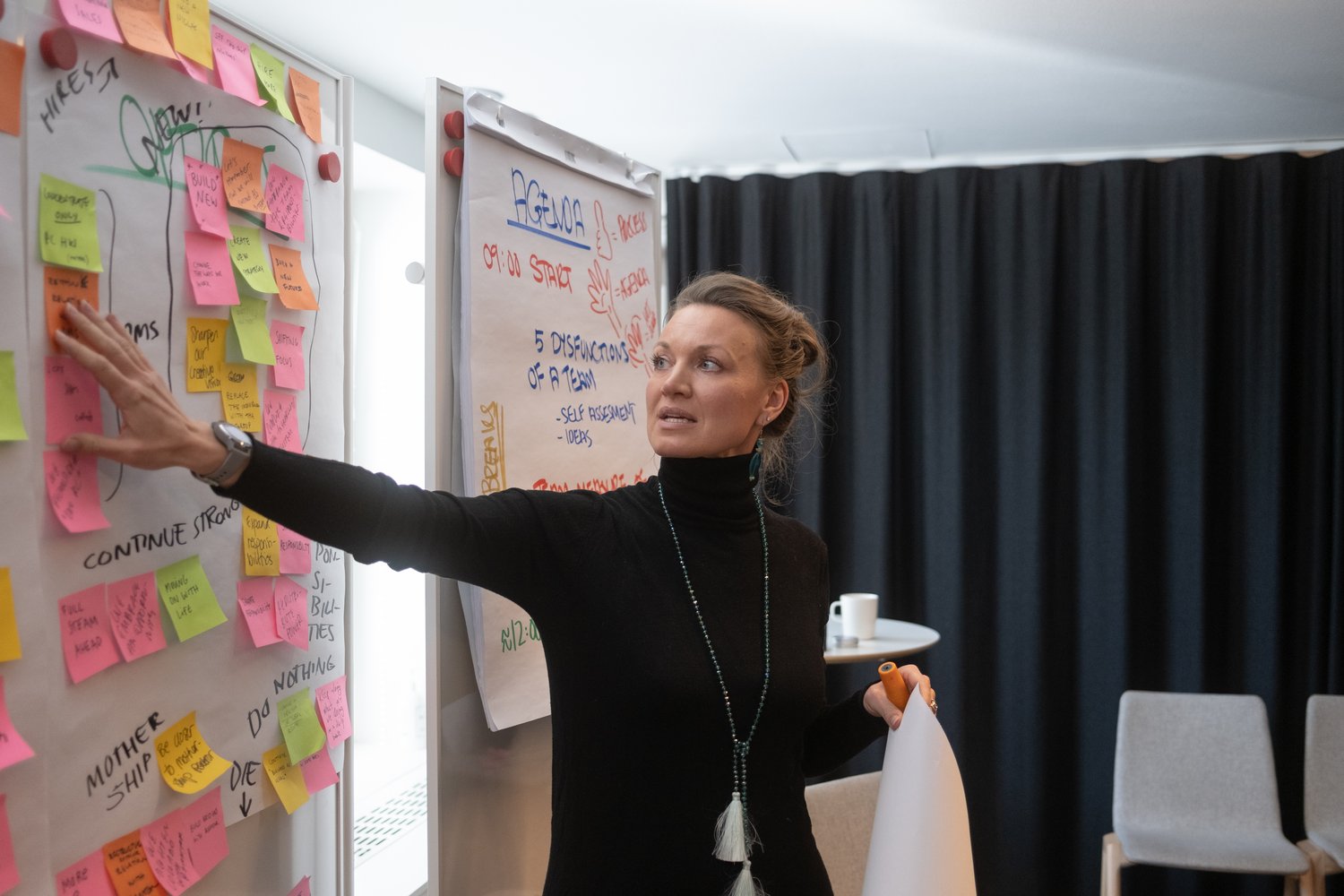
What can you achieve through facilitation? — With real-life examples
Facilitation improves the “what we do” through explicit goals for the meeting: why we are meeting and what we are expected to achieve. When that is known, we can invite the right people. It further ushers us toward explicit decisions, minimizing misunderstandings through visualization so the group gets a clear sense of what we are deciding on, why, and what happens next.
Facilitation directly improves the “how we do” by getting everyone involved and collaborating toward the meeting goal. The facilitator keeps the discussion on track. Well-facilitated meetings build trust among the group and invite real collaboration, where debates are welcome.
When we have an explicit goal, the meeting can end when we reach it and not when the calendar pings the start of the next meeting. So, dear reader, getting a clear what and a qualitative how are great, but what does that actually mean for our results?
1. Better decisions
Facilitation brings out collaboration, drawing on the unique perspectives of each team member to make more informed, creative decisions. The result? Smarter, faster, and more innovative solutions.
- A tech team had difficulties making decisions. Numerous experienced specialists would spend hours, days, and sometimes weeks debating options and often not getting a final decision at all. Through facilitation, the team built a working decision-making structure in just three hours.
- In a specialist team, a few senior members were overworked, and there was stagnation in the air. An idea was proposed: “Let’s visualize the work!” The team decided to distribute the work differently going forward. People were allowed to gravitate toward work they were interested in through pairwork. All in just two and a half hours.
2. Enhanced productivity
Great facilitation cuts through the noise, streamlining communication and reducing misunderstandings. Teams that collaborate effectively share knowledge, resources, and tasks seamlessly, driving projects to completion more efficiently.
- A tech team was unhappy with its productivity. Through facilitation, their process was visualized, and three different budget gates for the same money were identified. After a discussion with the management, two of these gates could be removed for small and medium-sized features, which improved the team's productivity immensely. This was achieved through two facilitated three-hour sessions.
3. Unleashed creativity and innovation
Facilitated collaboration creates a safe space for fresh ideas to flourish.
- An international pharma team innovated how to best use their online board for asynchronous work and re-did the structure through a facilitated retrospective in an hour.
- A communications team transformed their daily meetings to get more focus on the work and next steps rather than on free-flowing discussion through facilitation in 30 minutes.
4. Higher engagement and satisfaction
Facilitated meetings don’t just get things done. They also create a sense of belonging. People feel more connected, more valued, and more engaged. This leads to happier, more motivated employees and lower turnover rates.
- An educational team was able to digest the implications of being acquired. After the workshop, ambiguity was replaced with a concrete plan of what shall be achieved and how. All in one day.
- Two banking tech teams were being united, and through facilitation the new team could decide on shared ways of working and feel in control of the situation. All in three hours.
5. Effective problem solving
Collaboration isn't just about getting things done. It's about solving complex problems. Effective facilitation helps teams approach challenges from multiple angles, pooling their strengths to overcome obstacles and reach solutions faster.
- An IT team was feeling overwhelmed by expectations to keep crucial services up and running over the summer. Through facilitation, the team was able to create a plan that worked for all individuals and for their stakeholders. In two and a half hours.
- In a governance team, the same problem kept popping up. Data governance is crucial to lawfully be able to continue the bank business, and yet, very few within the bank understood its importance. Through facilitation, this problem was addressed in new ways. An invitation was sent to the most important stakeholders across the bank, and the the conversation was flipped. It is not what they can do for our governance team but what you need from your governance team to complete your work better. All in four hours.
All of the above outcomes move from inexplicit to explicit, from the muddy and unknown to the clear through facilitation. As we collaborate better, our meetings improve, we need less of them and have more time to focus on the work at hand.
6. Fun is not just to get people to show up – it has real benefits
Fun isn’t just for kids, but research shows that fun is a serious driver of productivity (Oxford study happy workers 13% more productive). When people are enjoying themselves, they’re more engaged, more creative, and more open to collaboration. A well-facilitated meeting can be fun, leading to less stress, better mental health, and stronger relationships. These elements boost motivation and job satisfaction, creating a thriving, high-performing workplace.
- Throughout a large agile transformation, there were many facilitated workshops. Frequent breaks every hour kept participants energized. For each workshop fun agile videos would be selected and shown after each break. Most people were on time perhaps because the videos were fun, and those that weren’t didn’t miss anything crucial.
- After a long and arduous project within a government agency, medals were given out to all involved thanking them for their service. The medals weren’t official, but it was a fun way of showing appreciation.
- Icebreakers are great ways to start a meeting. For example, fill bowls with different colored candy – each color is tied to a specific question. Usually, we get some laughter and get to know each other a little bit better. A time-conscious way to add some fun.
Your path to meeting mastery
Facilitation isn’t just a skill – it’s a superpower that transforms meetings from a time sink into a source of energy, innovation, and productivity. Whether you’re part of a small team or leading a large organization, investing in facilitation skills will unlock the full potential of your team. Want us to facilitate something for you? Or better yet, make you the expert?
Start your journey today with our facilitation course, and see the difference it makes. Your meetings and your results will never be the same again.
Sign up now, especially if you are reading this while in a meeting.