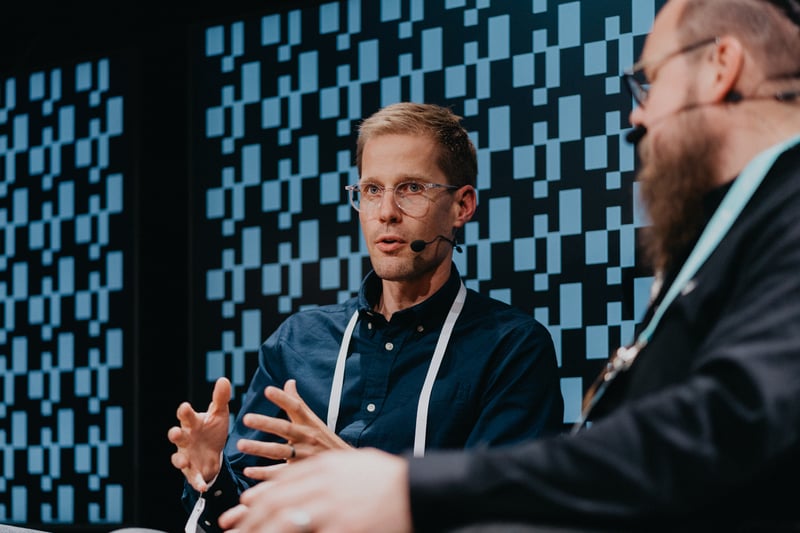

This June, Reaktor Retail joined one of the largest gatherings of retail leaders, brands, platforms, and technology providers at Shoptalk Europe 2025 in Barcelona. Over three days, one thing became clear: even as retail is evolving, the fundamentals haven’t changed.
“Retail is not complicated, but it’s difficult to do.”
That quote was a standout one during the conference, a reminder that success in retail depends on a set of fundamentals: brand, assortment, channels and distribution, supply chain and logistics, and customer experience. Within this context, technology can be a powerful accelerator, but only when these fundamentals are already in place. When done right, tech multiplies value: improving efficiency, deepening consumer engagement, and making the business more adaptive, responsive, and personal.
Brand comes first
If there was one recurring message from the event, it was this: brand is the most important strategic asset in retail today. It defines emotional connection, sets expectations, and provides clarity and focus.
Across all categories, from technical performance to heritage fashion, leaders emphasised that brand essence must come before all else and be protected at all costs. At Hoka, that essence was born out of product feel and a loyal, passionate community. Rather than over-optimising for rapid growth, the company focused on authenticity, fast prototyping, and emotional storytelling. Its physical spaces are designed as immersive centers to let customers truly experience the brand.
Canada Goose echoed a similar philosophy. They treat store associates as brand ambassadors and see product knowledge not just as a hygiene factor, but as a sales driver. Their immersive in-store elements (we’re talking cold rooms here!) help tell the story, but equally important is what the customer walks away with. Physical experience matters, but so does substance. Notably, their entrepreneurial culture has led to innovation directly from the shop floor, as seen in the launch of their footwear line, which was sparked by input from store teams.
Rituals reinforced this thinking by positioning their stores as the ultimate brand experience. Their “House of Rituals” concept in Amsterdam combines wellness, beauty, and content into a single immersive journey that turns physical retail into a sensory hub. Their shift from beauty to wellness is a brand narrative powered by continuous product innovation and thoughtful service.
On, meanwhile, takes a disciplined approach to brand expression across its channels. Every decision, from where it shows up to what products are sold through which channels, is designed to reinforce a premium, technical positioning. The channel mix isn’t solely about conversion or logistics; it’s brand strategy in motion.
Even legacy brands are thinking this way. Mango has structured its international expansion around a 4E framework: Elevate, Expand, Earn, and Empower. This gives the company a clear set of priorities as it grows, especially in new markets, where consumer behaviours are significantly different. Similarly, Manolo Blahnik has stayed off most marketplaces, choosing to protect brand heritage and craftsmanship through direct-to-consumer and carefully selected platforms.
In-store remains the most powerful brand expression
While digital channels have taken center stage in recent years, the physical store continues to be where the brand truly comes alive, because it’s where customers still engage with other humans face-to-face.
What’s changed is how retailers are using technology in the store environment. The emphasis has shifted away from dazzling the customer with flashy tech and experiences toward empowering the store associate with the tools, knowledge, and data to provide a more meaningful, personalised experience.
At H&M, RFID tags now integrate with the H&M app, guiding customers to items in the store that they’ve liked online. Store associates receive live trend data that helps them design more relevant and engaging window displays. Tendam has gone a step further, training staff to use customer data in-store, not to make recommendations, but to invite more authentic conversations and understand who they’re talking to.
Canada Goose summed it up best: “Technology should whisper, not shout”. This sentiment echoed across many sessions. AI, RFID, and recommendation engines are being deployed widely, but always in service of human interaction, never as a replacement.
Retailers like LEGO and MediaMarkt are reimagining physical stores not as transactional spaces, but as memory-making destinations. Whether it’s LEGO’s storytelling-led store design or MediaMarkt’s gamer zones and in-house TV studios, the goal is the same: turn physical retail into a space for community, creativity, and brand immersion.
The lines between channels are blurring – fast
Another theme running through the event: customers expect more from all channels. They seamlessly move from physical store to site, from app to social, from inspiration to purchase, all in one fluid motion, and all without consciously thinking about it. But that doesn’t mean brands can afford to be channel-agnostic.
The most forward-thinking retailers are treating each channel as a deliberate expression of the brand, with clear rules for how and where products show up. On is particularly disciplined in this regard, using strict product segmentation across channels and pushing back against marketplace dilution. The logic is simple: every interaction with a customer is a brand moment; don’t leave it to chance.
Nestlé and Bloomreach are actively embracing this “channel-less commerce” approach, using livestreams and shoppable content to create fluid, shoppable moments within moments of inspiration, discovery, or learning. Meanwhile, H&M’s unified data from store heatmaps and stock sensors has shown that a store can be as data-driven as eCom if you have the right systems and tech in place.
Omnichannel is real, but often still incomplete
Most retailers now have the technology for omnichannel, real-time inventory, ship-from-store, and unified customer data, but operational and cultural integration still lags.
For example, a store may know an item is available online, but without clear incentives to guide customers to ecommerce, the journey breaks. Fulfilment systems might be integrated, but if the store associate isn’t empowered to act across channels, it becomes a dead end. True omnichannel remains elusive not because of technical barriers, but because of outdated structures, ways of working, and disconnected incentives.
Tendam appears to be making real progress here. With over half of online sales now occurring in-store and unified incentives across channels, their approach demonstrates how integrated technology, simple tools, and aligned teams can drive true omnichannel results.
Ahold Delhaize is also advancing on this front, using predictive tech for demand forecasting, AI-driven pricing, and loyalty programs that link directly to nutrition scores and personal behaviour.
Final thoughts
Shoptalk Europe 2025 wasn’t about the next big disruption. It was about refinement, clarity, and focus. The most successful brands aren’t chasing the ‘next thing’, they’re sharpening their understanding of who they are and making decisions that protect and amplify that identity.
Because in the end, while technology will continue to evolve and solve challenges, one thing stays the same: retail is not complicated, but it’s difficult to do.
Rethink loyalty: what modern customers really want