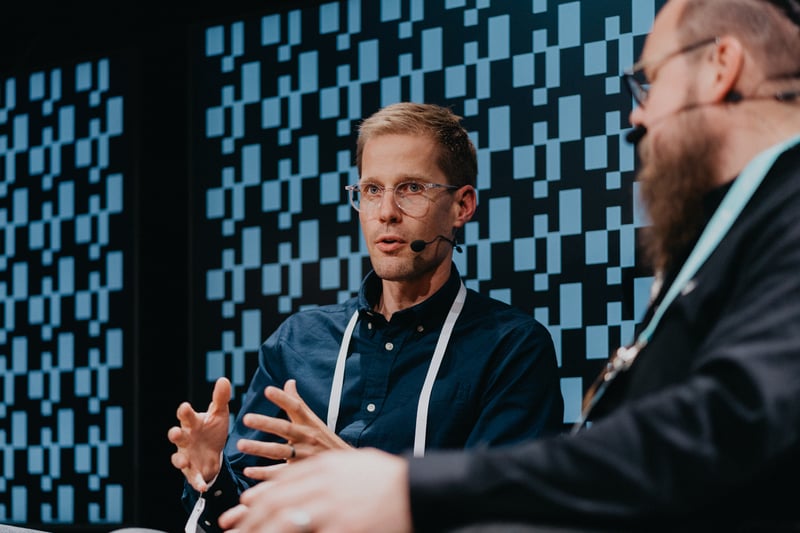
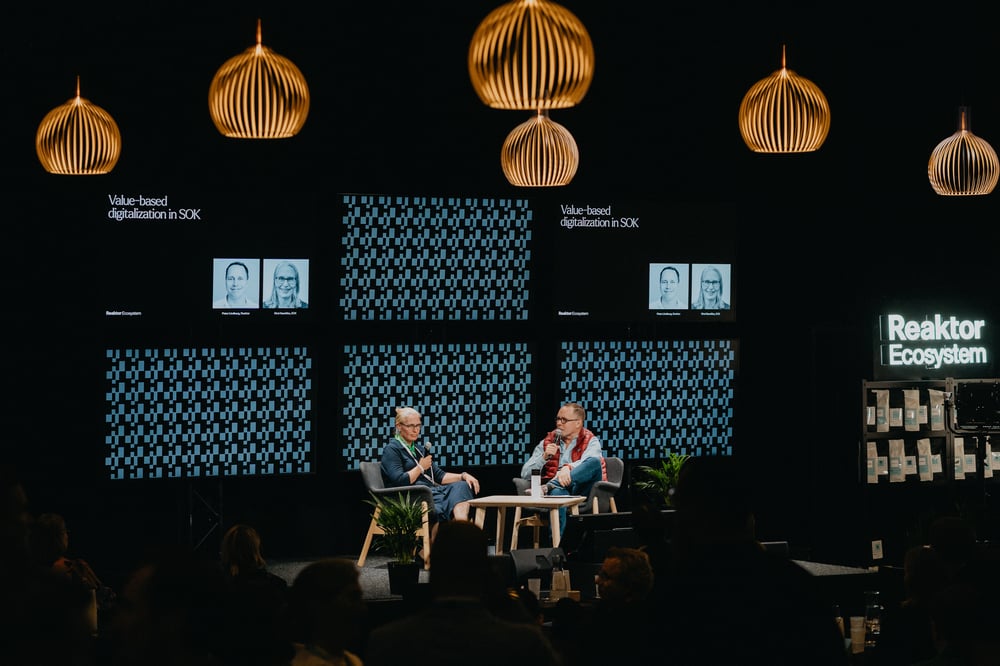
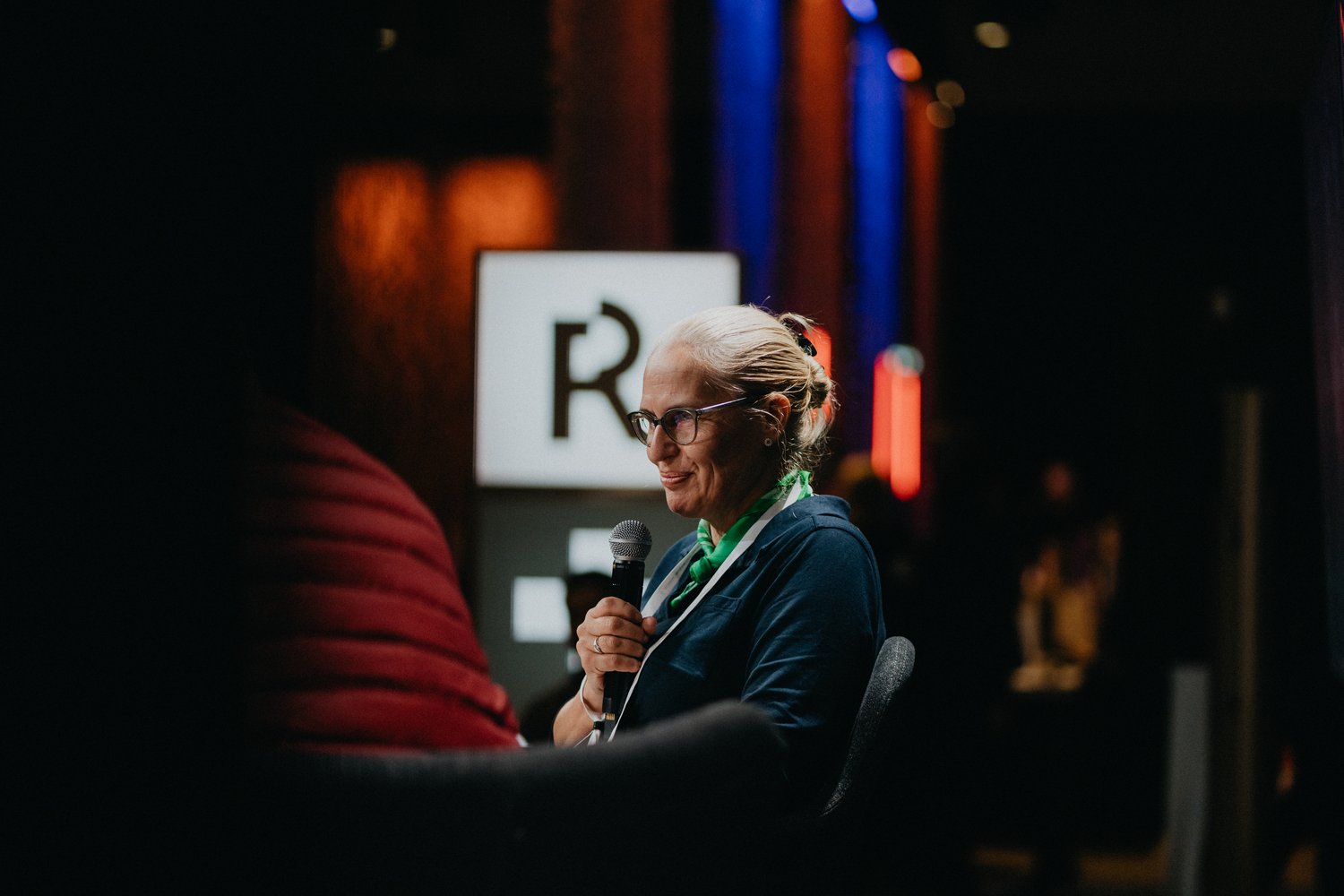
S Group's leap in digitalization has been impressive. Today, they are leading the way in online grocery shopping and their innovations make everyday life easier for millions of co-op members. We got the chance to pick the brain of one of the key leaders behind this innovation: Kirsi Saarikko. She is the VP of Retail IT and Digital Development at S Group. Our Peter Lindberg sat down with her at Nordic Business Forum to discuss S Group's digital journey and our longstanding collaboration. Watch the full recording or read through the key learnings here.
Key learnings from S Group's digital transformation:
1. Organize without slowing down innovation
When an organization spans multiple industries, regions, and brands, coordination can easily become chaos. At SOK, hundreds of digital initiatives once ran simultaneously across the group. To make progress visible and meaningful, Saarikko and her team reorganized around business processes rather than isolated projects. Today, 17 cross-functional teams focus on specific value streams, each with clear business targets and ownership of outcomes. Instead of steering through a tangle of project lists, SOK manages progress through shared goals that connect business and technology from the start.
For a company as large and multifaceted as S Group, with everything from grocery chains and car sales to banks and hotels, this structure brings coherence without slowing innovation. Each cooperative remains empowered to make local decisions, while chain-operated businesses like grocery benefit from shared efficiencies that reinforce S Group’s core promise: everyday low prices.
2. Change that sticks happens small
Cultural transformation rarely succeeds by decree. Saarikko emphasized that lasting change at SOK has come from small, continuous steps taken together with the teams doing the work. Rather than announcing grand reorganizations from the top, change is tested, measured, and scaled gradually. Teams are encouraged to experiment, learn, and deliver tangible business value in short cycles, each sprint offering a moment of celebration and progress.
This incremental approach has made the shift toward agility not only possible but motivating. People see the effects of their work, experience autonomy within clear boundaries, and develop confidence to drive the next iteration. As Saarikko put it, large transformations succeed when they feel small enough to grasp.
3. Freedom within a framework
Autonomy at SOK does not mean independence without direction. Each team operates within defined business targets and budgets, using that structure as both a guide and a guardrail. Teams are trusted to decide how to reach their objectives, but are held accountable for the why, the value created for customers and co-op members.
This balance between freedom and focus enables SOK to cultivate self-organizing teams that remain aligned with company-wide strategy. The framework transforms autonomy from a cultural slogan into an operational reality. It also strengthens collaboration between business and technology, ensuring that decisions about systems and design are made by those closest to the customer.
4. From hierarchy to value streams
For an organization with over a century of history, moving away from hierarchical structures is no small feat. Saarikko attributes much of the shift to necessity: in a digital world, the only sustainable way to deliver services people actually use is through iterative development and rapid learning. Gone are the days of thick requirement documents sent off to external vendors. Instead, SOK teams test, prototype, and refine continuously with users, making digital development an ongoing dialogue rather than a transaction.
While not every part of the organization operates fully in this model yet, the digital domain has paved the way. The progress is visible not only in business results but also in employer reputation: SOK now ranks among the top ten most desired digital employers in Finland, a remarkable leap from being unlisted just a few years ago.
5. Partners as catalysts for learning
Saarikko described SOK’s partner strategy as a balance of flexibility, learning, and capability building. External partners bring elasticity when business needs shift, as well as fresh insights from other industries. By mixing internal and external talent within teams, SOK accelerates its own learning curve. Many external teams start by exploring a new problem space and are later integrated into the organization once the scale and value become clear.
Crucially, partnerships at SOK are measured by collaboration quality, not just delivery. Challenges inevitably arise when teams blend people from different companies, but the best partners focus on solving the issue, not on assigning blame. As Saarikko noted, this attitude is what distinguishes a good partner from a great one.
6. A partnership built on trust and shared goals
At Reaktor, we are honored to have been able to be alongside S Group in this transformation. We have worked together for years, navigating growth, modernization, and experimentation side by side. What has made the relationship endure, both agreed, is openness and mutual respect – a sense of being on the same team.
Saarikko credits much of SOK’s agility journey to partnerships that brought new practices, strong technical leadership, and a culture of continuous improvement into the organization. For Reaktor, the collaboration has been equally valuable, offering a front-row seat to one of Finland’s most ambitious examples of large-scale, value-driven digital transformation.
As the discussion made clear, transformation at SOK is far from finished, but its success so far rests on a simple idea: when business frameworks, empowered teams, and trusted partners align around shared value, even a 100-year-old organization can reinvent itself from the inside out.