Having coached high-performing teams for 20 years, Jarkko Kailanto wanted to put pen to paper to capture a method he’s found to be the most effective of them all. For a co-writer, he found – surprisingly – a couples therapist. It turned out that the same challenges and needs make or break a dream team both in business and in romance.
It’s a project where everything flows effortlessly. The team clicks, communication is smooth, quality of work is through the roof, and you start thinking: this one’s for the ages. But then, friction enters the room – maybe a disagreement, a misunderstanding, or just two different working styles clashing. Suddenly, the dream unravels. What’s most frustrating is that many of these breakdowns could have been prevented with just a short investment of time, sometimes as little as a few dozen minutes.
Been there, done that? We all probably have, because it’s far too common and actually not that different from challenges in relationships.
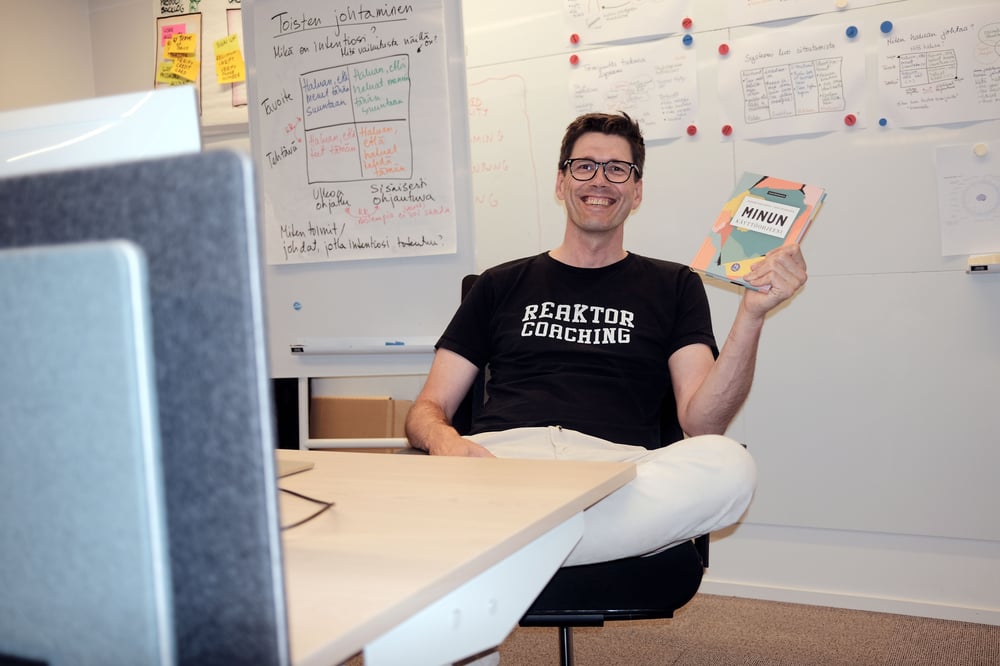
That’s the conclusion of Jarkko Kailanto, a coach at Reaktor who has spent over two decades helping teams succeed and shine. Of all the theories and tools he has tried, the one that has proven most powerful is My User Manual (MUM) – a method he has developed and used for eight years and has now written a book about, together with couples therapist Eevi Vuoristo.
Speedrunning self-awareness for better teamwork
What do business teams and relationships really have in common? “Quite a lot, actually,” says Kailanto, whose friend (also an author) initially recommended a collaborative and cross-disciplinary approach for writing the book.
“Eevi and I noticed very quickly that we were working with the same people. The executives and leaders who come to my trainings at work are often the very people who end up in Eevi’s couples therapy sessions. Just in a different role. These are also often people who are doing this kind of conscious self-awareness work for the first time, and it’s heartwarming to see them get insights about how understanding themselves better actually helps them to work with others better.”
My User Manual is more about preventing fires than putting them out, as it helps skip relationships ahead several steps and starts building good dynamics right away. As such, it probably prevents problems altogether.
In both contexts, the most important thing is that we feel good and safe around the people we are with. That comes from knowing and understanding what differentiates us – and letting that be visible – and, even more importantly, realizing how similar people ultimately are. Instead of making this all feel like a university course or a marathon therapy session, MUM is more akin to speedrunning self-awareness and understanding others.
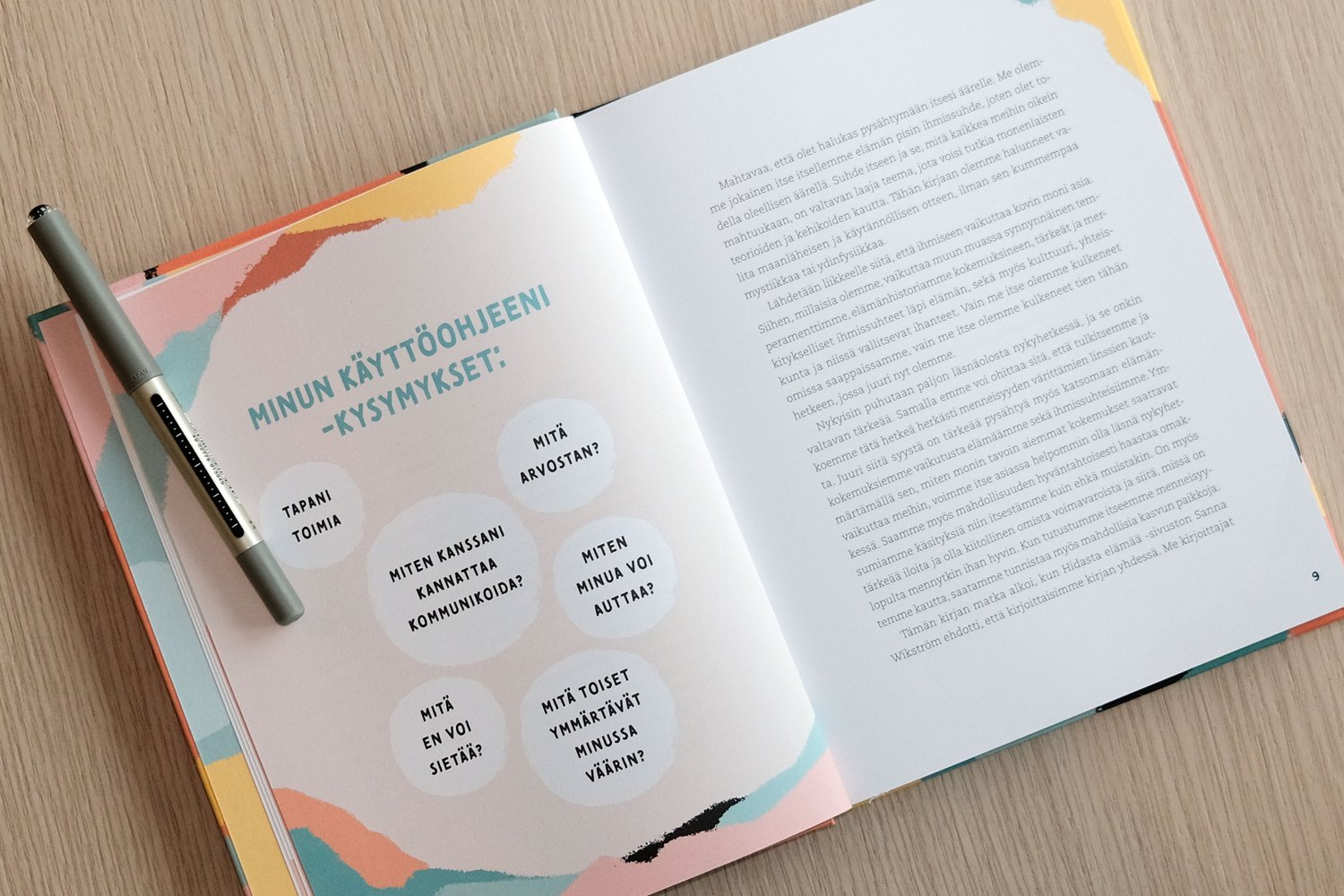
In simple terms, it works by having everyone first fill in their User Manual, a paper handout or digital file, by answering six questions: the way I operate, what I value, how to best communicate with me, what I can’t stand, how I can be supported, and what others often misunderstand about me.
Writing the answers down matters because it helps with articulation and confidence when they are read out loud in the group. Doing just this already creates psychological safety and acceptance – key factors in projects, as well as in Reaktor’s culture, says Kailanto. Yet, it’s in scenarios like the one described at the beginning where the biggest value of MUM lies.
“MUM is more about preventing fires than putting them out, as it helps skip relationships ahead several steps and starts building good dynamics right away. As such, it probably prevents problems altogether. And if things nevertheless escalate, having discussed our personalities and being able to bring up different needs in relationships works as a cushion to make inevitable conflicts more manageable
Complex projects need more than code. They need connection.
That emotional skills, openness, and similar practices are at the core of relationships shouldn’t come as a surprise to anyone. However, when discussed in the context of Reaktor, a technology consultancy, or in business in general, some may raise an eyebrow.
But it’s no wonder, really. IT projects are notoriously complex, typically involving multiple vendors collaborating with the client and other stakeholders as a unified team. With such a diverse group, often even formed from competitors, it truly benefits from self-reflection and tried-and-tested team-building methods, such as MUM.
Whether it’s cultural differences, neurodiversity, personality types, or factors like shyness and openness, My User Manual can help mitigate differences and build camaraderie.”
“We don’t expect everyone to work or approach things in the same way, so this exercise lets each person put their preferences out in the open. Whether it’s cultural differences, neurodiversity, personality types, or factors like shyness and openness, MUM can help mitigate differences and build camaraderie.”
“Understanding our differences is also a must for being able to benefit from them. Someone might be more detail-oriented, while someone else is good with the big picture, and so on”, Kailanto adds.
The importance of all this isn’t going anywhere anytime soon. Quite the contrary: as hybrid work and hybrid teams become more prevalent, there’s an urgent need to build teams with intent. But why MUM? Wouldn’t any other method work just as well – for example, the classic survival simulations (Lost at Sea, Desert Survival, etc.)?
“Sure, they work alright, but I’ve noticed that talking about real people in real situations instead of metaphors truly levels up the value one can gain from these exercises. There are no masks or roles, and people get a safe space to truly share who they are and what they need.”
Three lessons that work in both business and love
1. Better self-understanding leads to better mutual understanding
The more you know about yourself – how you operate, what you value, and what you need – the easier it is to connect and interact meaningfully with others.
2. Expressing needs openly helps others support you
When you voice your needs instead of keeping them hidden, it gives others clarity and makes collaboration smoother and more effective. People are actually very understanding towards each other when we connect with each other honestly and openly, much more so than what we fear.
3. Understanding others turns irritation into empathy
When someone behaves in a way that feels odd or frustrating, it can often actually make a lot of sense from their perspective. Pausing to reflect on what might be behind their actions builds compassion, reduces friction, and makes teamwork flow more naturally.
About Jarkko
Jarkko helps people and teams improve their interaction skills through coaching and training. In his book, he has gathered models and exercises that have proven effective, allowing more people to benefit from them. In his work, he hopes to increase mutual understanding and make the world a slightly better, kinder place.
Want to learn more about My User Manual?
If you're curious to learn more, get your copy of Jarkko's book here. With the code "jarkko15" you get 15 % off your book! Learn more about Reaktor's training and coaching here.